

At the presentation on 26 January 2026 at the Volkshochschule Freiburg, the VISIONS OF SUSTAINABILITY team again provided insights into the project’s ongoing research. This time the focus was on the two films in the Well-Being series, Why We Cycle and Butenland, which were shown at the Harmonie Kino Freiburg between October and December 2025. The presentation was also the last public event of the project, which will end in February.
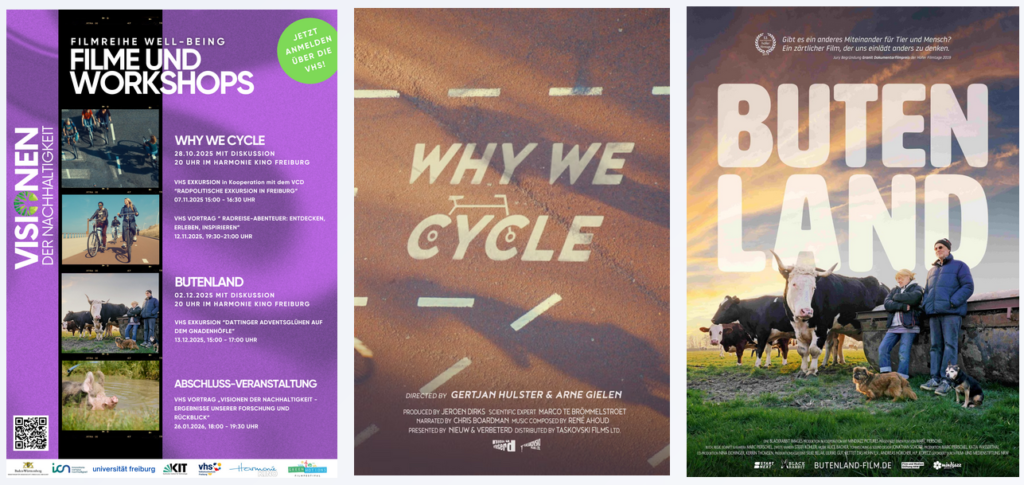
The joint presentation by project director Prof. Dr. Alexa Weik von Mossner and Thomas Heintz was the final event of the VISIONS OF SUSTAINABILITY project, which will come to an end in February 2026 after a runtime of two years. The speakers aimed to provide the interested participants with further insights into the ongoing evaluation of the data collected on the reception of the well-being films shown as part of the participatory research: the documentary Why We Cycle by Arne Gielen and Gertjan Hulstert, which entertainingly shows why the Dutch are so enthusiastic about cycling, and Marc Pierschel’s Butenland about a ‘cow sanctuary’ where humans and animals live together peacefully. In addition, the presentation informed the listeners about ongoing scientific publications and further planned results of the project.
Following an introduction by Daniel Mühl, the responsible department head at the VHS Freiburg, Alexa Weik from Mossner began by presenting the inter- and transdisciplinary project, its research questions and overarching objectives. The two films shown in the Well-being series were also presented again and their selection was briefly explained.
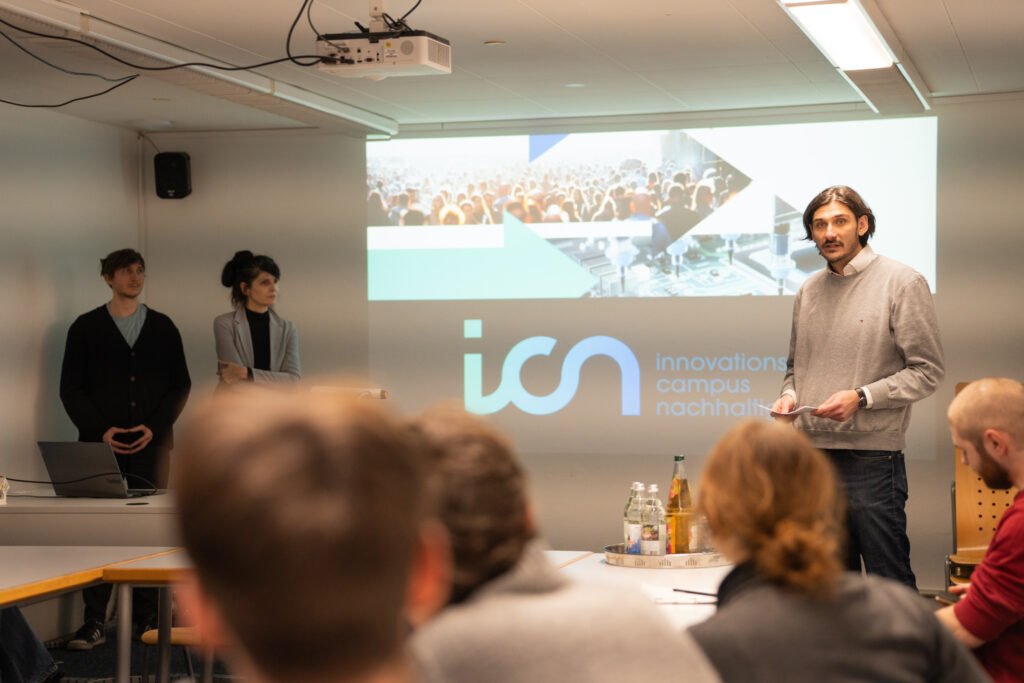
Thomas Heintz gave insights into the composition of the audience, who had the choice between an online and a paper questionnaire at each film screening at the Harmonie Cinema Freiburg. Using socio-demographic data, he showed that the audience remained relatively constant in its composition across the film screenings, namely predominantly female, with a higher level of education, mostly students or working professionals, and with a medium to low income. In general, it can be said that the film series was mainly attended by academics, with students, working people and pensioners also in the audience.
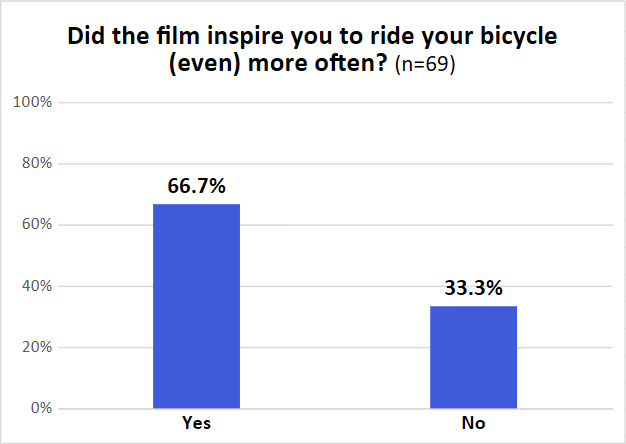
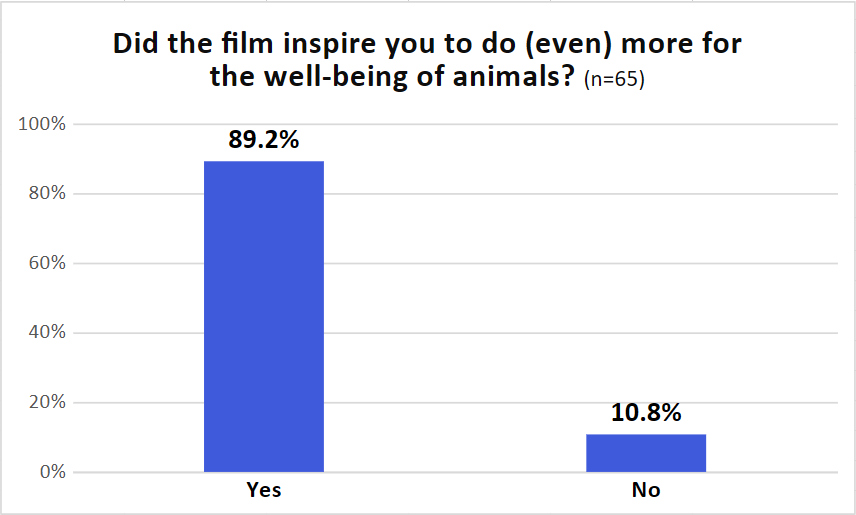
In the third part of the lecture, Thomas Heintz presented a comparison of the emotional reactions of viewers to the two well-being films, paying particular attention to the very different emotion-profiles. While Why We Cycle evoked predominantly positive emotions such as connectedness, hope and a drive to action in viewers, the emotional responses to Butenland were much more mixed, ranging from anger and sadness to compassion, connectedness and hope. Alexa Weik von Mossner used short film clips to show how the different receptions can be explained not only by the content of these very different films, but also by the filmmakers’ perspective and storytelling, as well as their use of cinematic techniques. The same applies to the attitudes surveyed on the topics covered in the films, with both films causing significant changes in attitude among viewers. In addition, the data show that the respondents felt inspired by the films to cycle (even) more (Figure 2) or to become (even) more committed to animal welfare (Figure 3).
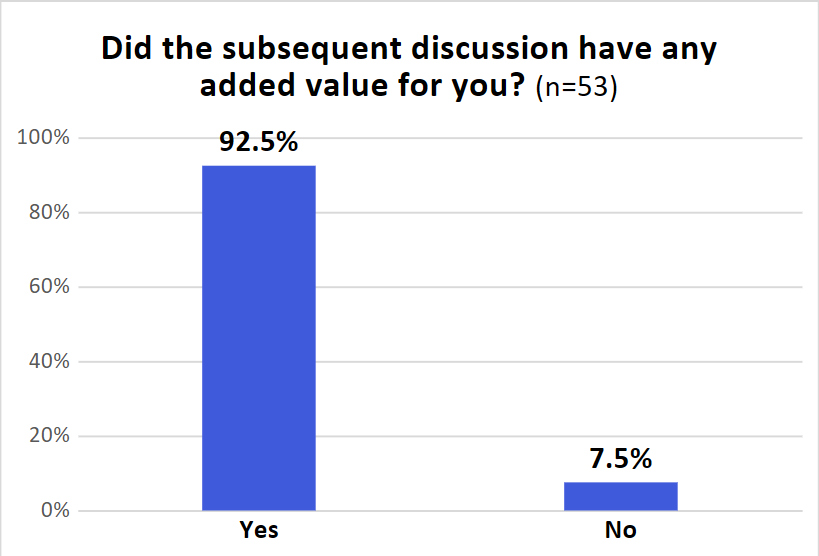
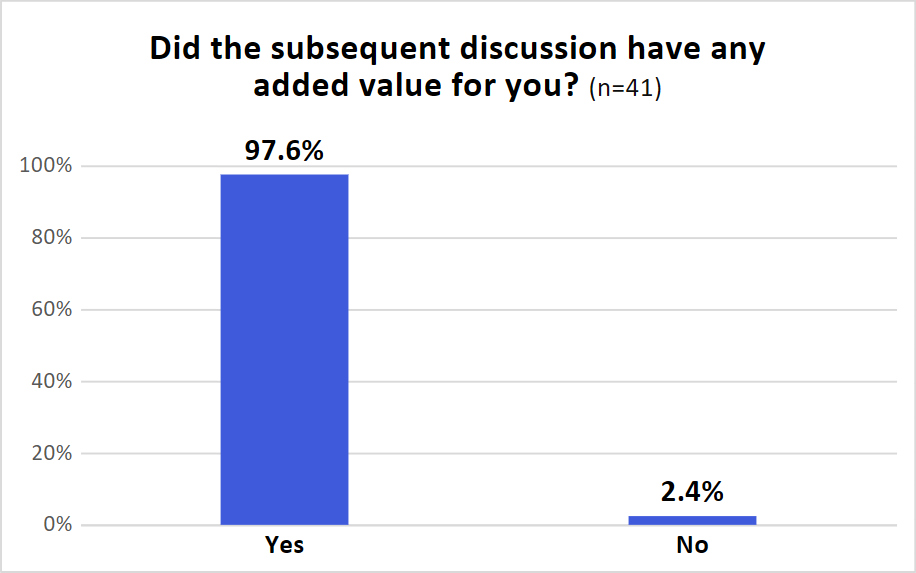
In addition, Thomas Heintz showed that the contextual embedding was once again highly appreciated by the audience in this latest film series, confirming the results of the first two series. Figures 4 and 5 show that a large majority of respondents (92.5% for Why We Cycle and 97.6% for Butenland) saw added value in the subsequent discussion with representatives from VCD Freiburg and Bike Bridge (for Why We Cycle) and from Lebenshof Hof Narr in Hinteregg (for Butenland). These results provide important insights for one of the project’s central research questions regarding the contextual embedding of film screenings in discussions with experts and practice partners as well as follow-up events.
The presentation concluded with a brief reflection by Alexa Weik von Mossner on the accompanying excursions with the VCD in Freiburg and to the Gnadenhöfle in Müllheim-Dattingen, as well as a presentation on cycling tours at the VHS. In the discussion with the participants, all the results and events of the Well-being series were critically reflected upon once again. Finally, the VdN team briefly discussed the creation of a guide to assist other organisations in planning film screenings on the topic of sustainability.
Until the end of the project, the research team of VISIONS OF SUSTAINABILITY will, apart from creating the guide, focus on further evaluating the collected data and working on scientific publications that compile and present the research results.
This event was part of VISIONS OF SUSTAINABILITY, an inter- and transdisciplinary research project funded by the Innovation Sustainability Campus (ICN), located at the Albert Ludwig University of Freiburg and the Karlsruhe Institute of Technology (KIT). Non-university cooperation partners include Harmonie Kino, the Volkshochschule Freiburg and Greenmotions. The Freiburg environmental mayor Christine Buchheit has taken on the patronage of the project.