
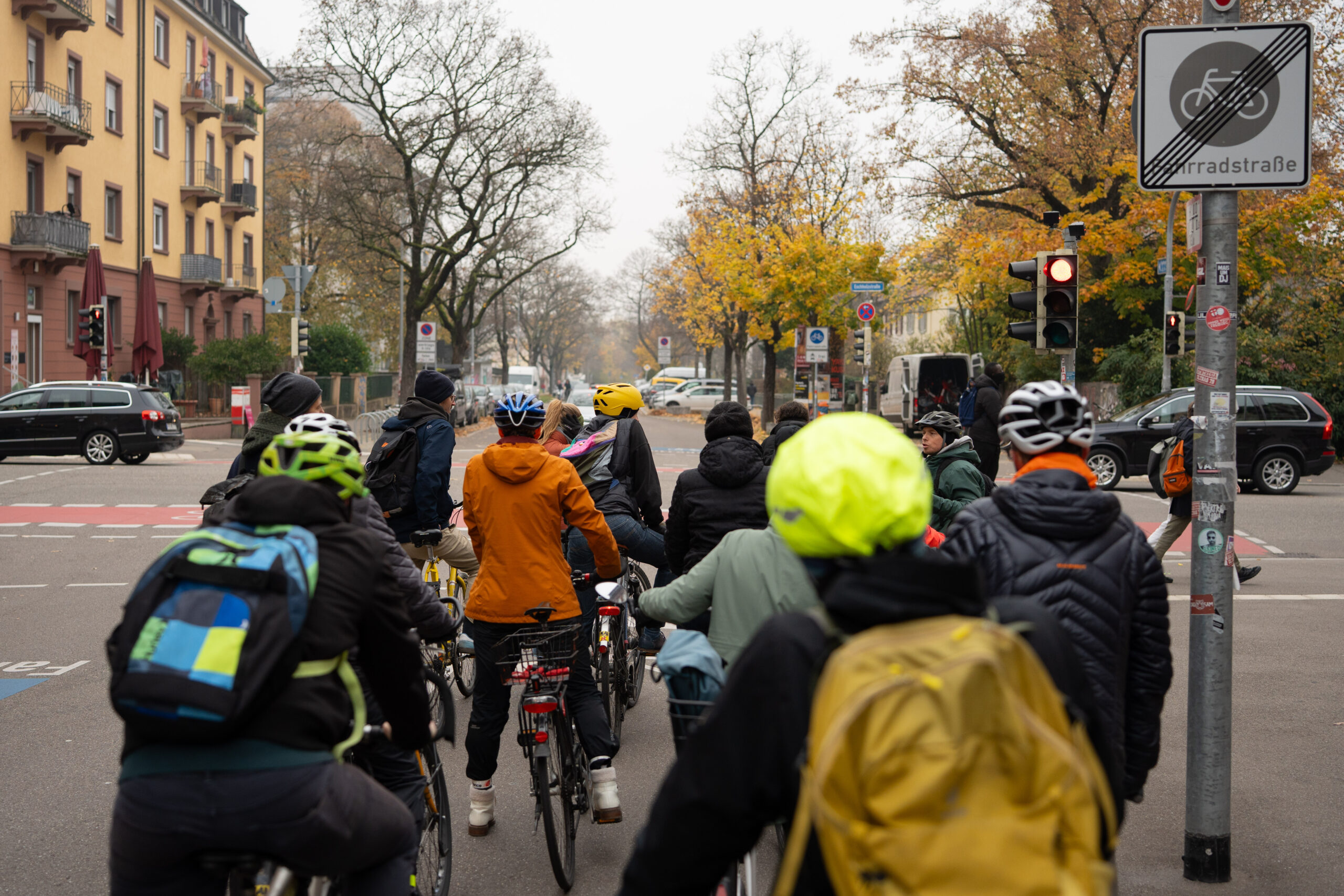
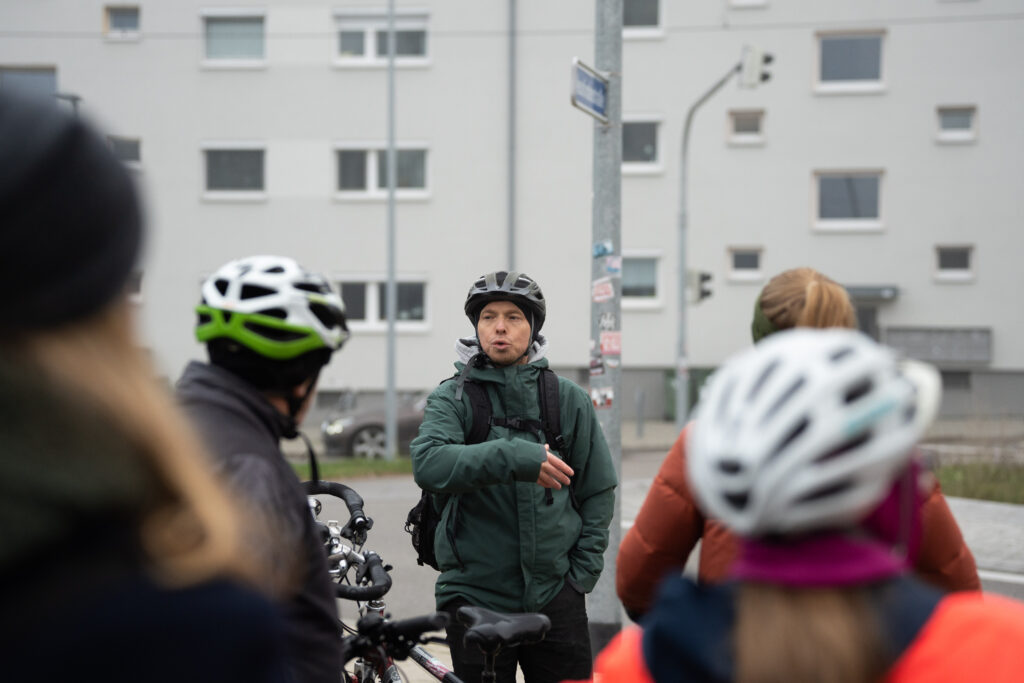
Led by Fabian Kern from Freiburg’s branch of the VCD, 15 participants two weeks ago hopped on their bikes to explore how the city organises bike travel. During the approximately 90-minute excursion, we visited numerous locations in Freiburg where projects for more bicycle-friendly road traffic have been implemented or are planned.
Following our screening of the Dutch film Why We Cycle, we also offered a cycling tour through Freiburg in cooperation with the VHS Freiburg. The film by Arne Gielen and Gertjan Hulstert clearly shows how heavily road traffic in the netherlands is geared towards cyclists. They have such a prominent position there that even traffic lights and intersections give priority to bicycle traffic, with car traffic being adjusted accordingly.
Our excursion subsequently showed what the cycling situation is like in Freiburg. Unfortunately, the results are only mixed. A lot has been achieved since the pedestrian and cycling referendum: the bicycle highways through Freiburg have been improved, and in several places in the city there is now even a right of way for these highways. In places such as the Wiwilí Bridge, central bicycle hubs have been redesigned as completely car-free zones.
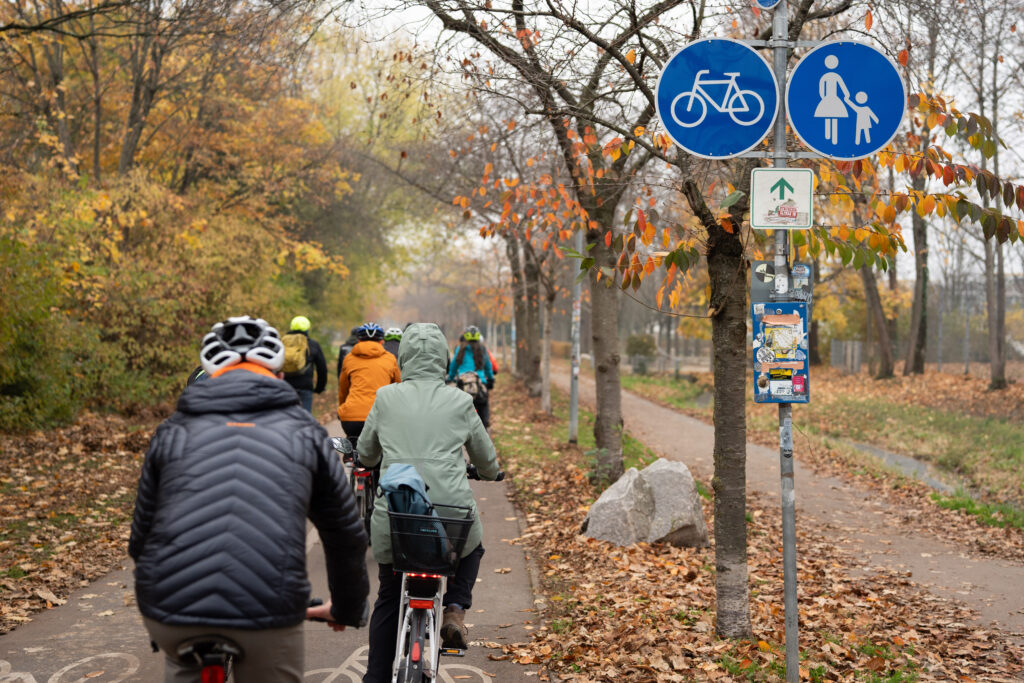
But in many other places, the VCD is still fighting to ensure that road traffic offers cyclists a stress-free experience of getting through the city. In Brühl or Herdern for example, cycle paths suddenly end or cyclists have to share narrow pavements with pedestrians. Even in Freiburg, which is relatively bicycle-friendly by German standards, there is still a lot that cyclists can fight for. If you too would like to campaign for more pedestrian- and bicycle-friendly traffic planning in your home town, you can find out about effective ways to get involved on the VCD website.
This event was part of VISIONS OF SUSTAINABILITY, an inter- and transdisciplinary research project funded by the Innovation Sustainability Campus (ICN), located at the Albert Ludwig University of Freiburg and the Karlsruhe Institute of Technology (KIT). Non-university cooperation partners include Harmonie Kino, the Volkshochschule Freiburg and Greenmotions. The Freiburg environmental mayor Christine Buchheit has taken on the patronage of the project.