
At the first screening event of our new series focusing on the theme of RESOURCES, a survey was conducted to assess audience responses to Marc Uhlig’s documentary UNSER BODEN – UNSER ERBE. Here we present the first results from the questionnaires.
I. THE FILM
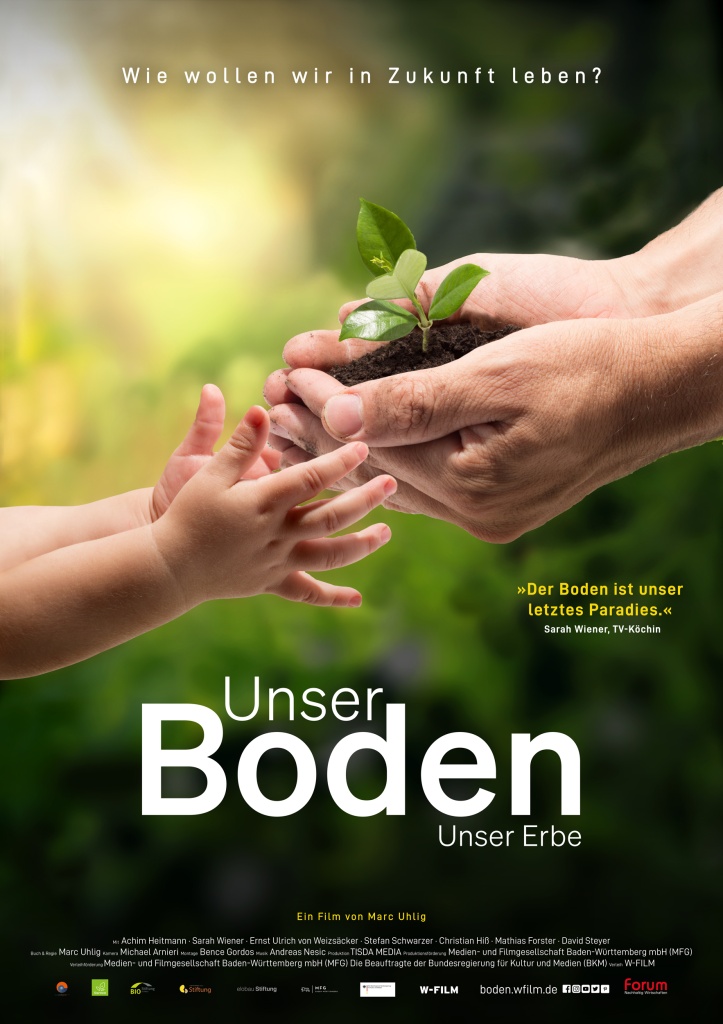
UNSER BODEN – UNSER ERBE
Marc Uhlig | 2020 | Germany | 76 min | German Original
Healthy soil is the second-largest carbon sink on the planet after the oceans, playing a vital role in reducing CO₂. However, it takes over 2,000 years to form just ten centimetres of fertile soil. Despite this, we treat our soil as if it were inexhaustible. This endangers our food supply—caused by us humans!
What does this mean for the future? How must agriculture and society change so we can pass on a living world with living soils to our children? The documentary Unser Boden – Unser Erbe highlights just how essential—and how threatened—our foundation of life truly is.
II. DATA COLLECTION
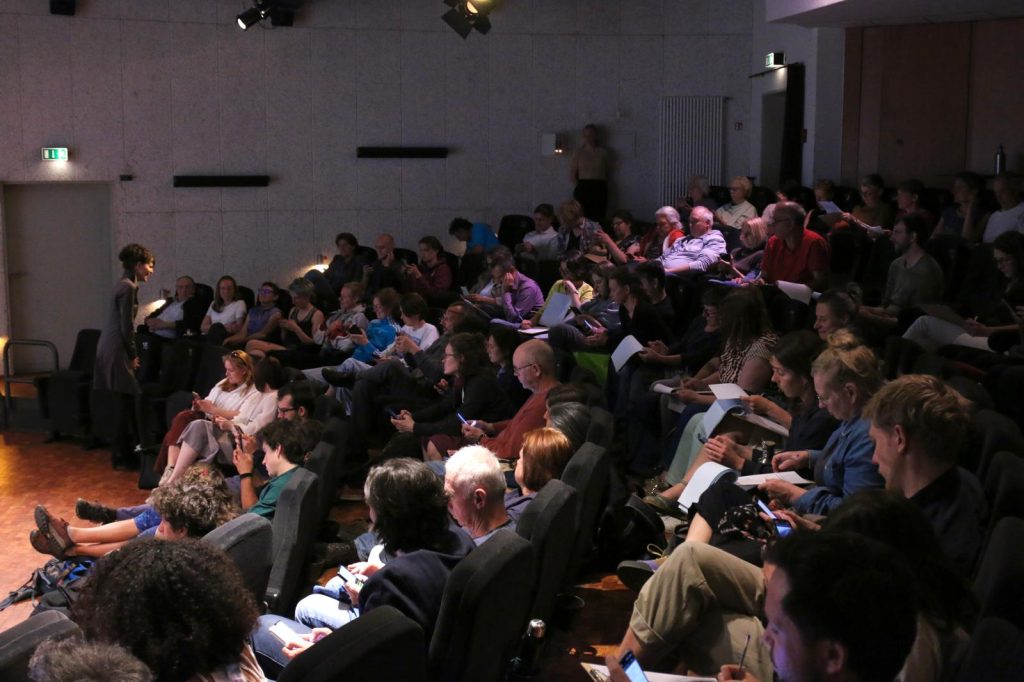
UNSER BODEN – UNSER ERBE was screened on April 29, 2025, at Harmonie Kino in Freiburg. The approximately 100 audience members could choose between an online or paper-based questionnaire. In addition to opinions on the role of ecologically sustainable agriculture for soil health, the survey also captured emotional responses to the film.
The questionnaire consisted of three parts: the first was completed shortly before the film, the second immediately after, and the third followed a panel discussion featuring organic farmer Florian Binder from Lindenbrunnenhof in Forchheim, who works according to the principles of sustainable circular farming and local direct marketing.
III. INITIAL RESEARCH FINDINGS
Below is an overview of the first descriptive analysis of the survey data. The letter “n” represents the number of respondents for a given question. For example, “n=67” indicates that 67 viewers responded. Please note that these findings are preliminary and subject to further in-depth analysis.
The initial responses already showed a strong interest in sustainability and food issues among the audience. As shown in Figure 1, 61.2% of respondents rated the importance of sustainability in nutrition as “very important,” and 38.8% as “important.”
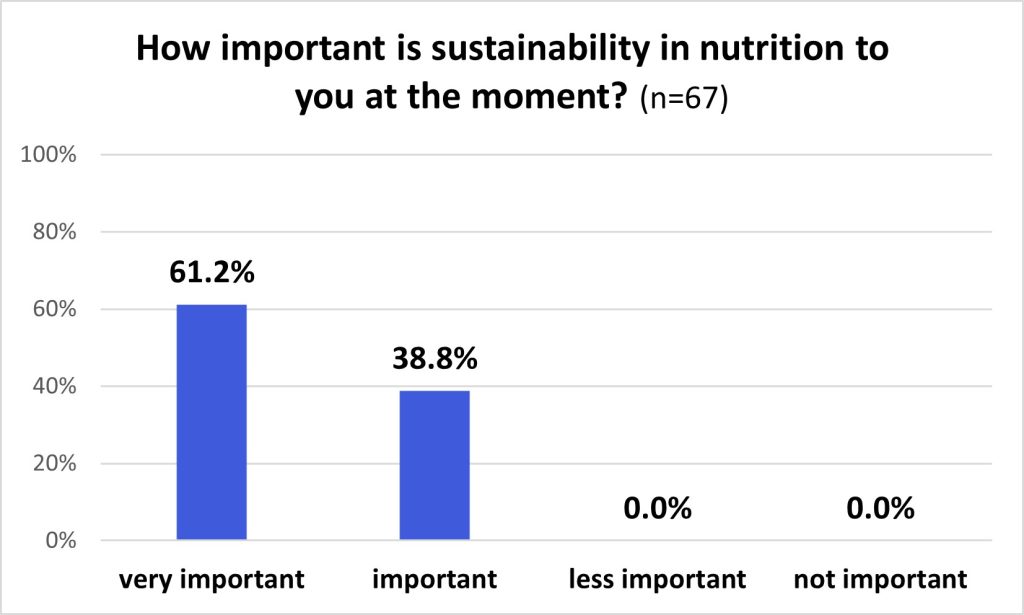
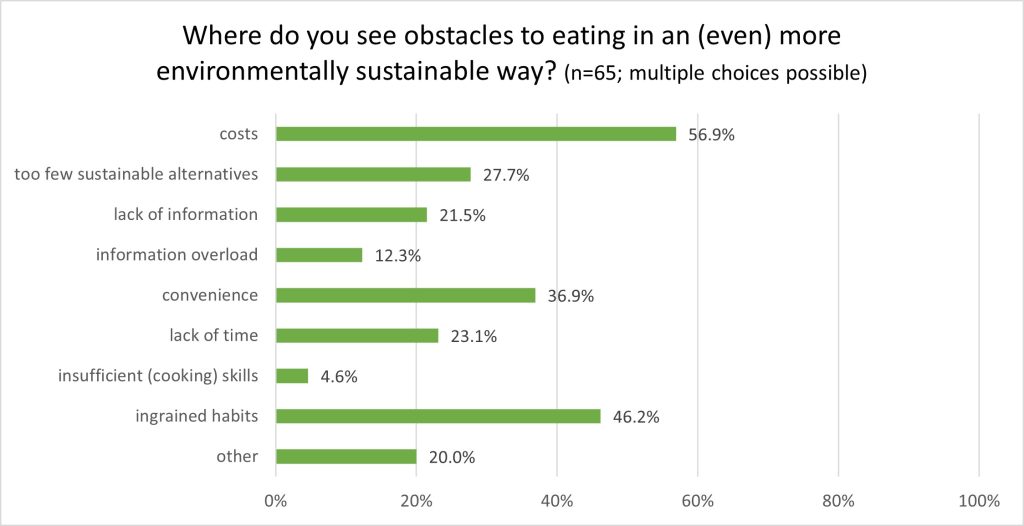
Figure 2 reveals the main obstacles perceived to adopting a more environmentally sustainable diet: high costs (56.9%), ingrained habits (46.2%), and convenience (36.9%).
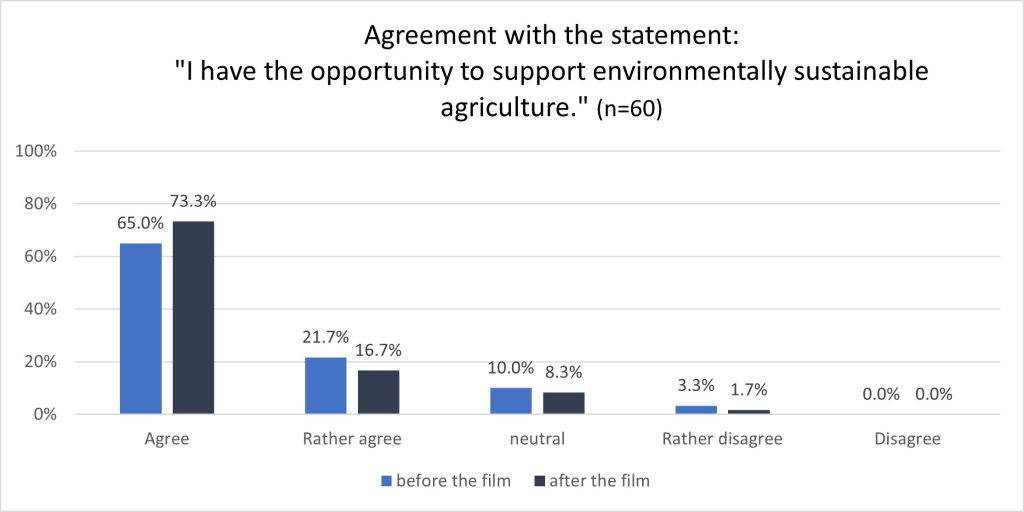
A particularly interesting aspect of the study was how the film affected beliefs around personal efficacy in supporting ecological agriculture. As shown in Figure 3, agreement with the statement “I have the opportunity to support environmentally sustainable agriculture” rose from 65.0% before the film to 73.3% afterward.
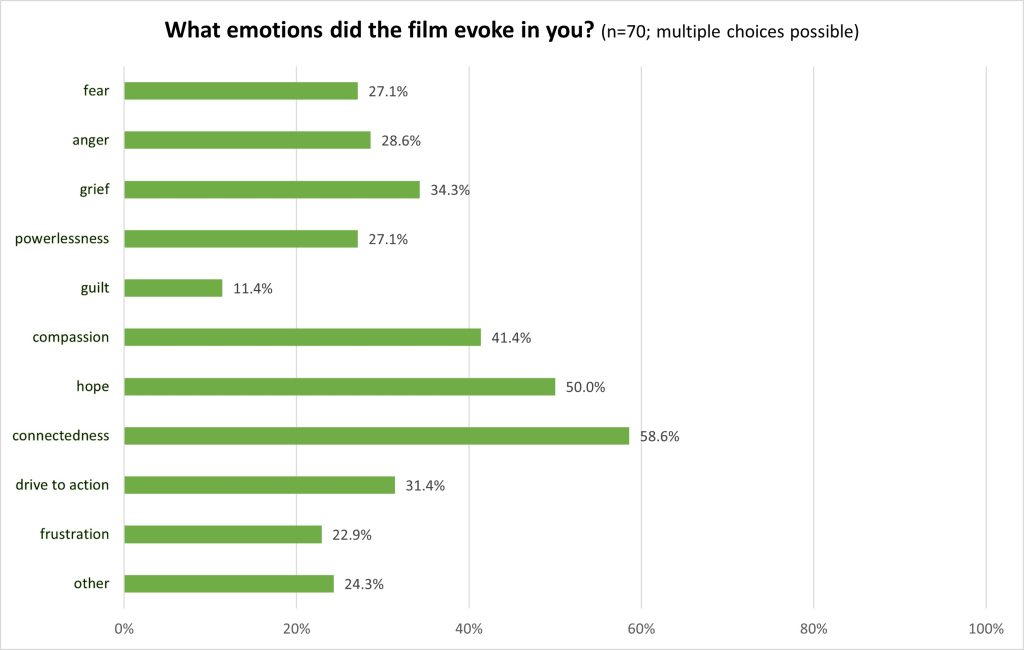
As with past surveys, we also collected emotional reactions to the film. Figure 4 shows that a majority (58.6%) of participants reported feeling a sense of connectedness. This was followed by feelings of hope (50.0%) and compassion (41.4%) toward the farmers portrayed in the film. Additionally, 34.3% felt grief, and 31.4% felt motivated to take action.
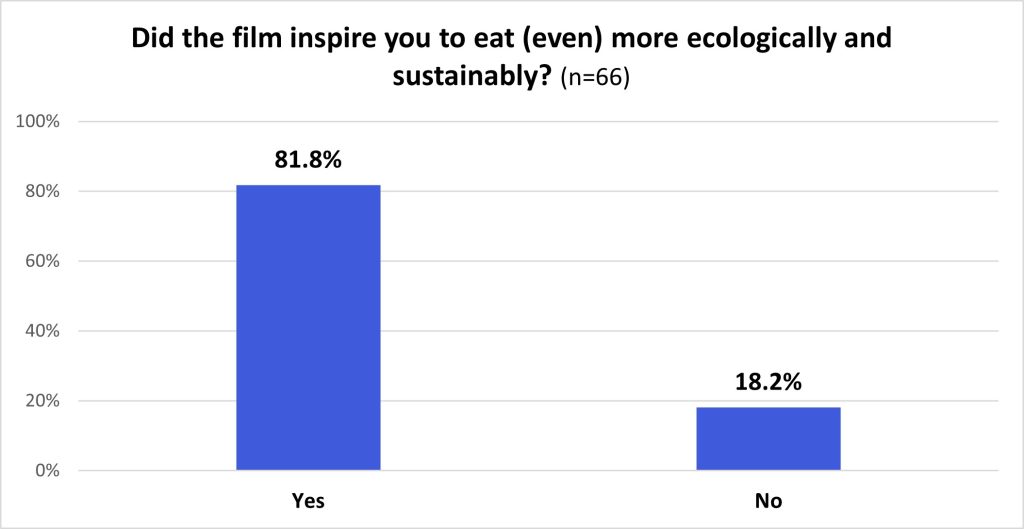
When asked whether the film inspired them to adopt a (more) environmentally sustainable diet, 81.8% of viewers said yes—an unequivocal result, as seen in Figure 5.
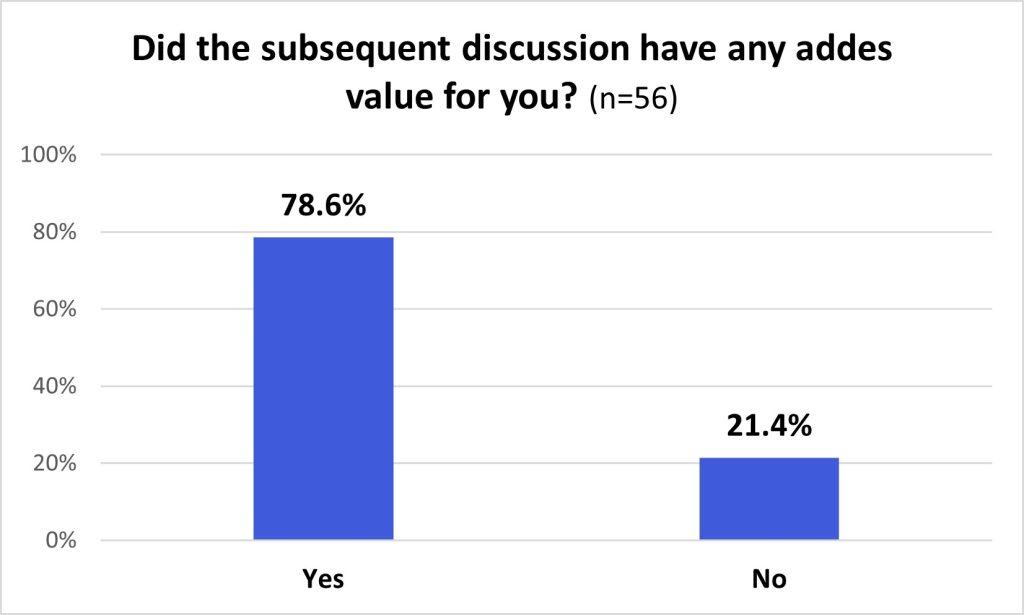
A key component of our research was the question of whether the post-screening discussion with organic farmer Florian Binder added value. According to Figure 6, 78.6% of attendees agreed it did. This high figure supports our hypothesis that pairing sustainability-themed documentaries with expert discussions—especially with practitioners—can enhance impact.
IV. CONCLUSION
In summary, the first evaluation showed that Marc Uhlig’s UNSER BODEN – UNSER ERBE primarily evoked feelings of connection and hope among our viewers. The film also influenced attitudes regarding self-efficacy in supporting sustainable agriculture and increased interest in sustainable eating.
The follow-up discussion with a dedicated local organic farmer proved valuable for the majority of the audience.
We would like to thank everyone who participated in the survey!
Next steps will include a more detailed analysis of the collected data and an exploration of correlations between different variables. Stay tuned!
VISIONS OF SUSTAINABILITY is an inter- and transdisciplinary research project funded by the Innovation Sustainability Campus (ICN), located at the Albert Ludwig University of Freiburg and the Karlsruhe Institute of Technology (KIT). Non-university cooperation partners include Harmonie Kino, the Volkshochschule Freiburg and Greenmotions. The Freiburg environmental mayor Christine Buchheit has take on the patronage of the project.