
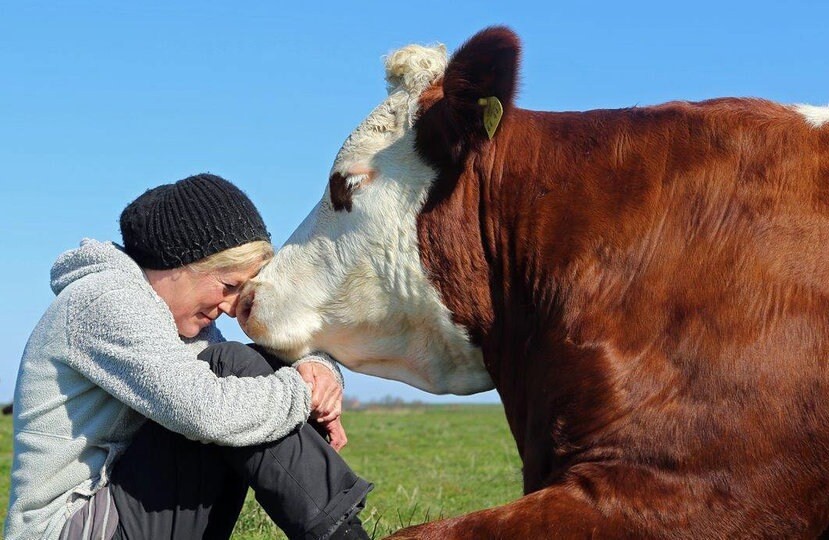
At the second film screening of our current series on well-being, a survey was conducted on the reception of Marc Pierschel’s BUTENLAND. Here we present some preliminary results from the questionnaire responses.
I. THE FILM
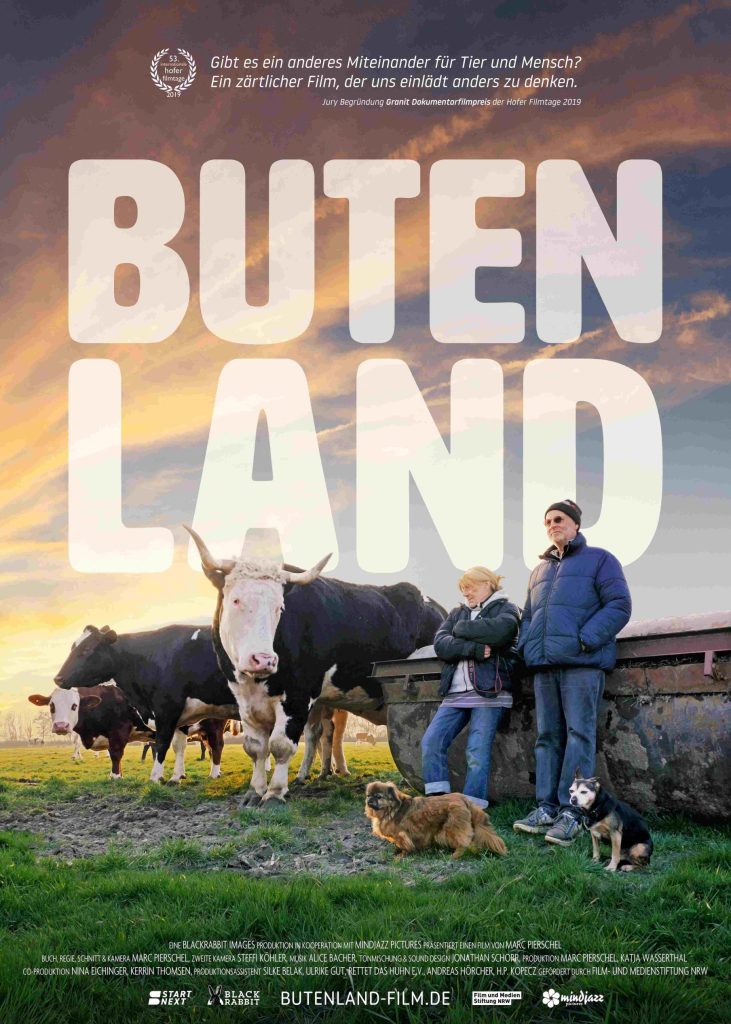
Marc Pierschel | 2020 | Germany | 82 min | German version
A farm that became a sanctuary – Former dairy farmer Jan Gerdes and animal rights activist Karin Mück have created a place where there are no more farm animals with their project Hof Butenland: a peaceful coexistence that seems almost utopian.
Butenland tells the story of two people who put the needs of animals first, far removed from any economic interests. Filmmaker Marc Pierschel accompanied the two on Hof Butenland with his camera over a period of more than two years. The intimate portrait captures moments of happiness and sadness, questions the current status of farm animals in our society, and leaves everyone touched.
II. DATA COLLECTION
Why We Cycle was screened on October 28, 2025, at the Harmonie Kino in Freiburg. Approximately 100 attendees had the option to fill out either a paper or an online questionnaire. In addition to attitudes toward alternative, ecologically sustainable economic systems, the survey also explored emotional reactions to the film.
The questionnaire had three parts: the first was completed just before the screening, the second immediately after the film. The third part followed after the subsequent panel discussion with Sarah Heiligtag and Georg Klingler, who themselves run an animal sanctuary called Hof Narr in Hinteregg (Switzerland).
III. INITIAL RESEARCH RESULTS
What follows is an overview of the initial descriptive analysis of the responses. The letter “n” indicates the number of people who answered a given question. For example, “n=67” means that 67 audience members responded. All results should be considered preliminary, pending further in-depth analysis.
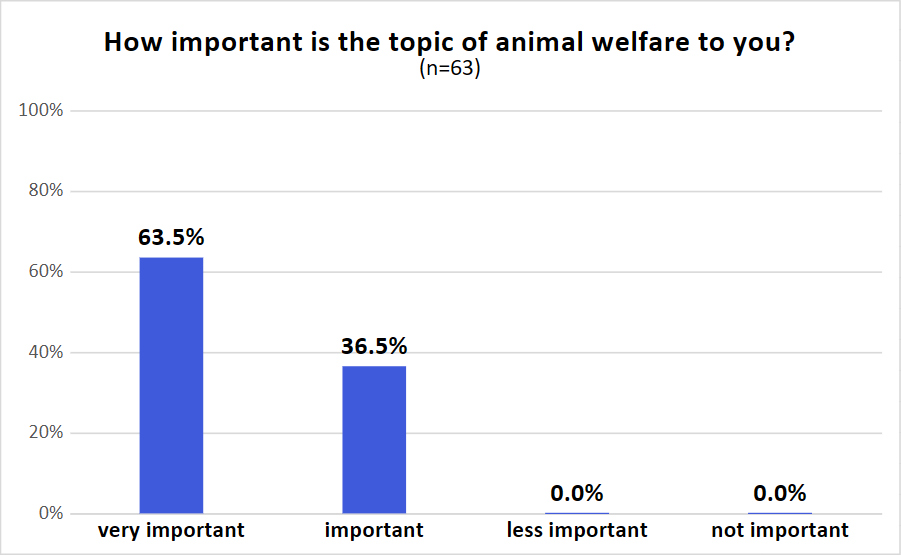
The survey showed that the topic of animal welfare is important (36.5%) or even very important (63.5%) to our audience, as illustrated by Figure 1.
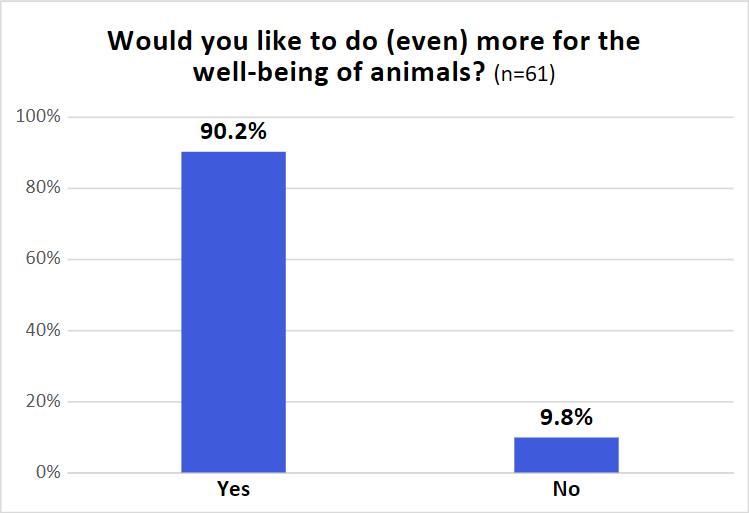
The question of whether viewers would like to do (even) more to promote animal welfare received a similarly high level of approval. 90.2% of viewers answered yes to this question (Figure 2).
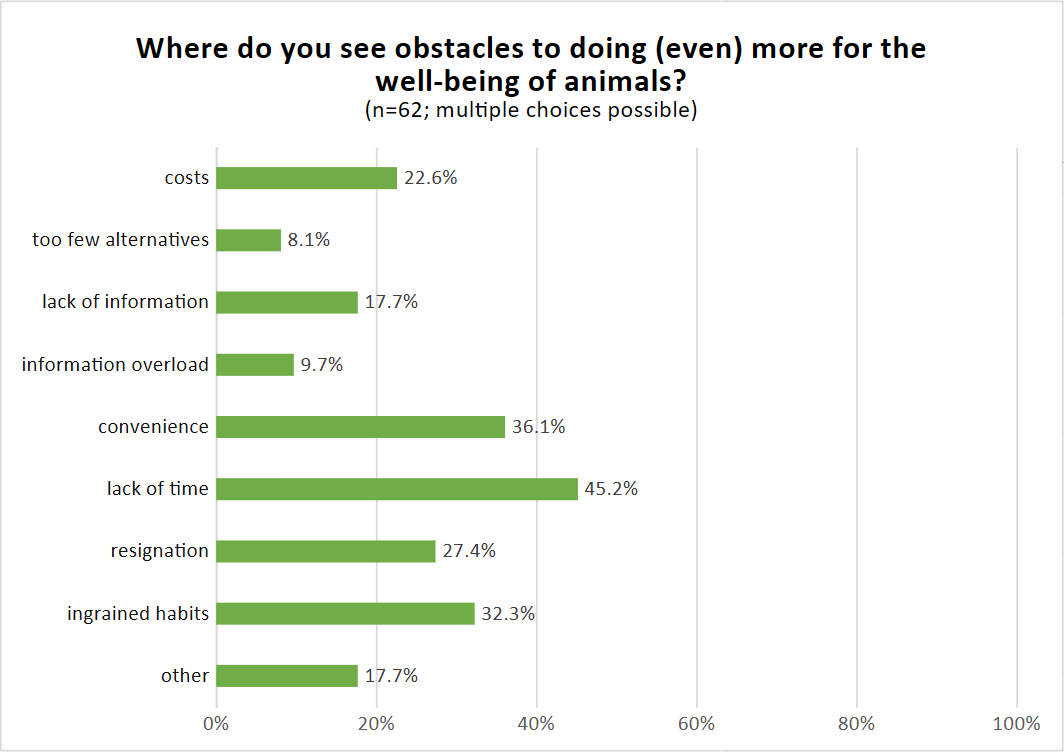
However, there are also obstacles to improving animal welfare. As Figure 3 shows, the main obstacles perceived by our audience are lack of time (45.2%), convenience (36.1%) and ingrained habits (32.3%). It is interesting to note that costs play a rather minor role in this issue for 22.6% of viewers.
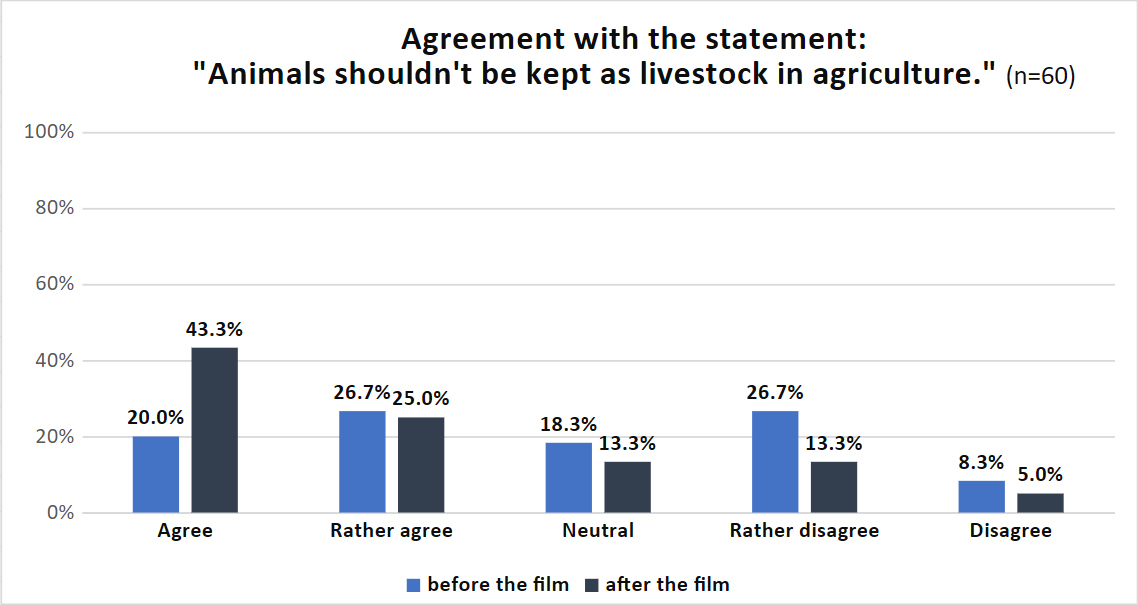
It was particularly important for us to measure the extent to which the film changed attitudes towards the so-called livestock in agriculture. As Figure 4 illustrates, before the film, 20% of viewers agreed with the statement that animals should not be kept as farm animals. After the film, this figure more than doubled to 43.3%. This shows that the film screening was able to bring about a clear change in attitudes.
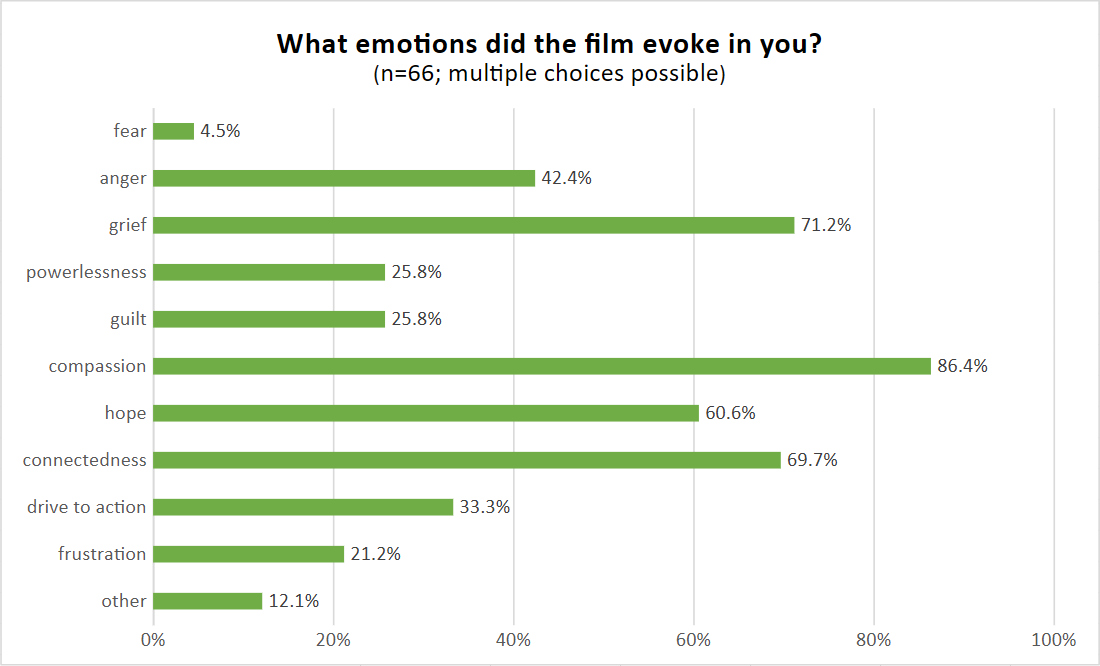
As usual, we again asked about emotional reactions to the film in the survey. As Figure 5 shows, the documentary evoked compassion (86.4%) and grief (71.2%) in particular among respondents, but also connectedness (69.7%) and hope (60.6%).
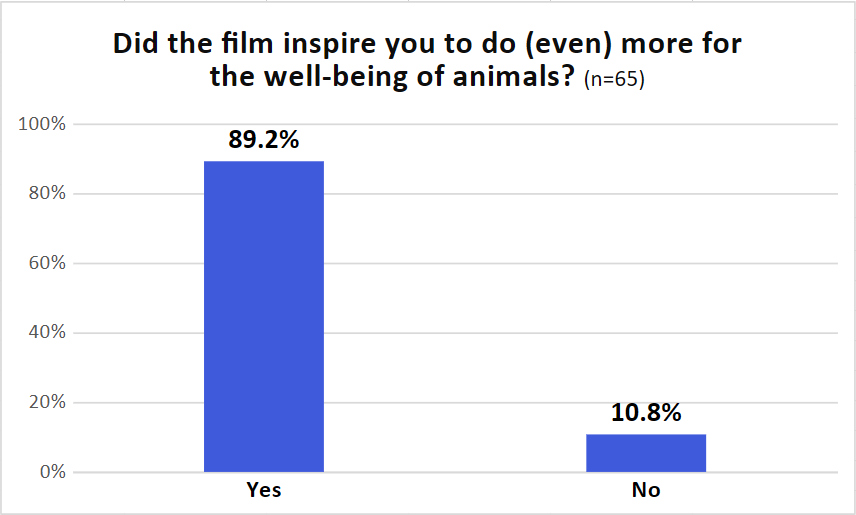
Whether Butenland inspired our viewers to become (even) more committed to animal welfare was answered in the affirmative by a clear majority of 89.2%, as can be seen in Figure 6. A look at the optional reasons given for the answers shows that some of the respondents are rethinking their consumer decisions when buying food.
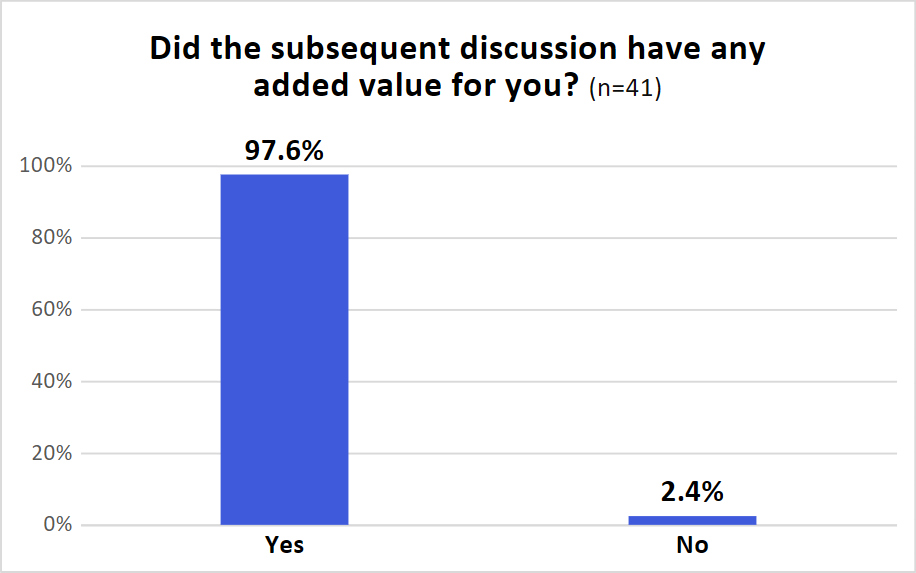
The responses from our viewers to the question of whether the discussion following the film provided additional value to viewers are also very important for our research. With almost 100% of the answers being yes, respondents stated that this was clearly the case (see Figure 7). This very high rating supports our assumption that it can be useful to offer documentary films on sustainability topics in combination with a subsequent discussion with experts. A closer look at the optional answers to the question shows that the practical examples provided by the invited guests, Sarah Heiligtag and Georg Klingler from Hof Narr in Hinteregg, were particularly well received.
IV. Conclusion
In summary, the evaluation showed that the film Butenland particularly evoked compassion, sadness and connectedness among many of our viewers. The film also brought about a significant change in attitudes towards animal welfare, with the majority of viewers agreeing after the film that animals should not be kept as so-called livestock. Furthermore, Butenland inspired a large majority of viewers to become (even) more committed to animal welfare. The subsequent discussion with experts from the field provided a very significant added value for the audience.
We would like to thank everyone who participated in the survey!
The next step will be a deeper analysis of the collected data, along with correlation analysis. Stay tuned!
VISIONS OF SUSTAINABILITY is an inter- and transdisciplinary research project funded by the Innovation Sustainability Campus (ICN), located at the Albert Ludwig University of Freiburg and the Karlsruhe Institute of Technology (KIT). Non-university cooperation partners include Harmonie Kino, the Volkshochschule Freiburg and Greenmotions. The Freiburg environmental mayor Christine Buchheit has take on the patronage of the project.