
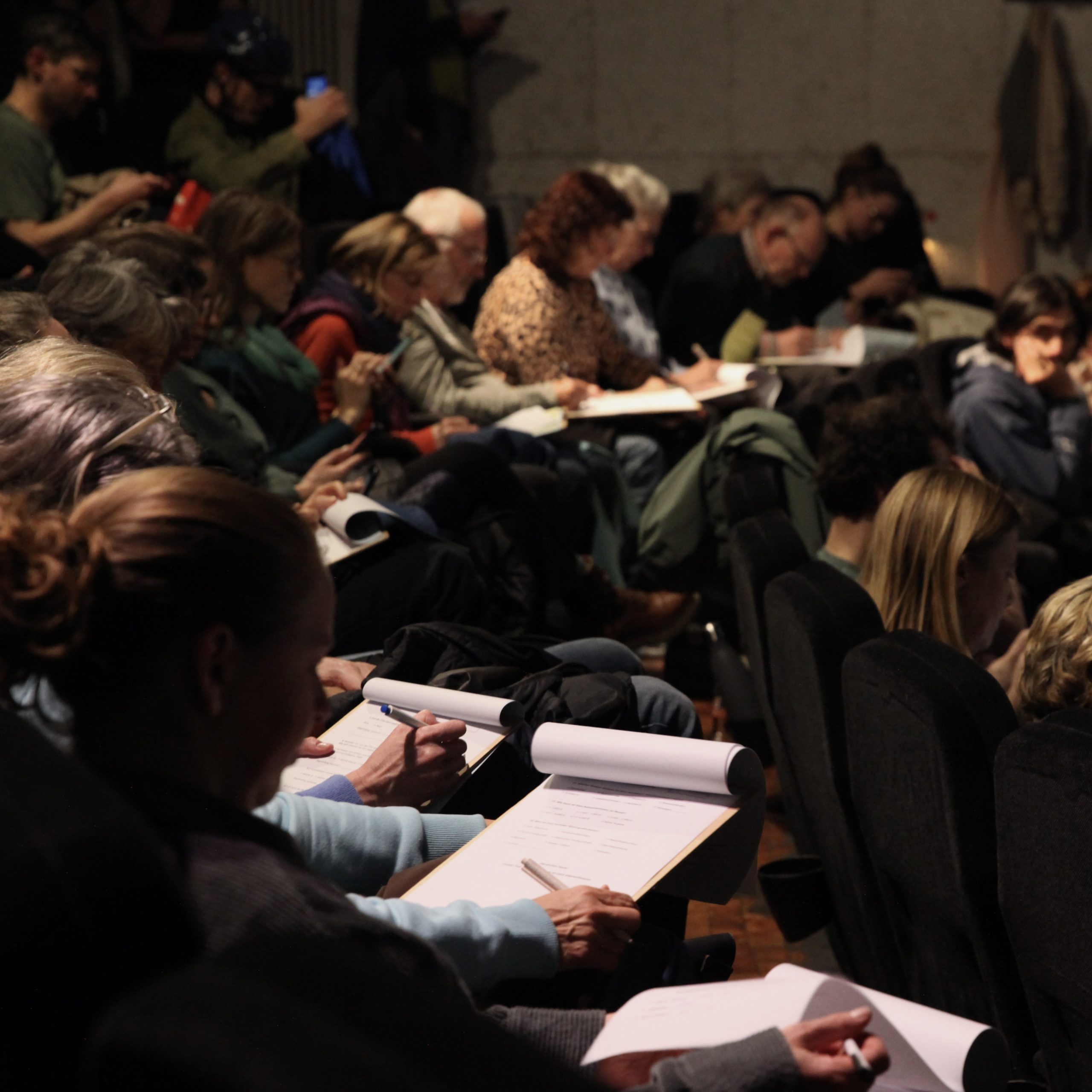
Last week, our third and final series on WELL-BEING kicked off with the Dutch film Why We Cycle. We were delighted to once again have a full cinema and an exciting discussion afterwards at the screening, which was organised in cooperation with VHS Freiburg at the Harmonie Kino.
The latest film series of the Visions of Sustainability project got off to a successful start again last Tuesday. The first film on the topic of WELL-BEING was the documentary Why We Cycle, which looks at how cycling culture in the Netherlands has a positive impact on people’s health and society in general. In our neighbouring country, the bicycle is the main means of transport for thousands of people and is used by young and old alike, both in the city and in the countryside. A well-developed network of cycle paths and large bicycle garages enable dutch people to get around easily by bike, regardless of where they live, and to park their bikes in the city without any worries.
The documentary by Arne Gielen and Gertjan Hulstert impressively demonstrates that cycling can bring numerous health benefits that go beyond mere physical activity and increased fitness. Experts and regular cyclists explain how cycling in the Netherlands automatically teaches consideration and attentiveness and contributes to the satisfaction and well-being of the population.
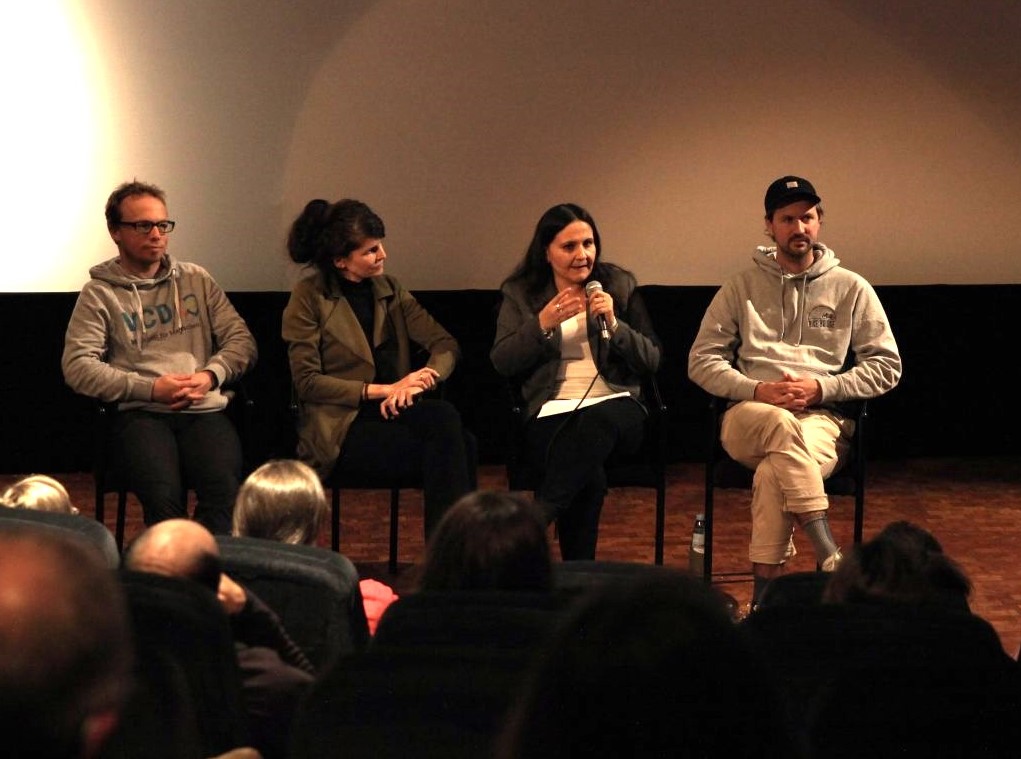
After the film, viewers were again able to share their impressions of the film with us via our questionnaire. We then talked to our guests about the film in a panel discussion and made connections to cycling in Germany and specifically in Freiburg. Fabian Kern from the Freiburg branch of the VCD pointed out the developments following the 2020 “Fuß- und Radentscheid” (pedestrian and bicycle referendum) in Freiburg. Although the cityscape has changed since then, the projects continue to face obstacles partly due to the low priority given to cycling in Germany. Zeinab El Hage Ali and Gregor Falter from Bike Bridge also presented the Bike and Belong programme. This programme gives women with and without a migration background the opportunity to learn to ride a bike in a supportive environment. Thanks to the project, many women feel more comfortable in Freiburg and have the confidence to go out on their own, thereby improving their spatial mobility. Cycling in this case not only enables greater independence, but also a greater sense of belonging.
However, discussions with the audience also made it clear that cycling in Freiburg is still not always a pleasant experience. Many roads designed for cars, with narrow cycle lanes and countless traffic lights, still offer room for improvement – even in Freiburg, which is comparatively cycle-friendly by German standards. So even in Freiburg, it is worth campaigning for a more cycle-friendly city.
On the topic of cycling, we will continue our WELL-BEING series on Friday, 7 November at 3 p.m. with a political cycling excursion in Freiburg. Guided by Fabian Kern from the VCD, we will visit several projects that have been completed in Freiburg since the “Fuß- und Radentscheid” (pedestrian and bicycle referendum) in 2020. As a second follow-up event to the film, ADFC Freiburg – Emmendingen – Breisgau-Hochschwarzwald will give a lecture on cycling adventures on 12 November at the VHS Freiburg at 7:30 p.m.
This event was part of VISIONS OF SUSTAINABILITY, an inter- and transdisciplinary research project funded by the Innovation Sustainability Campus (ICN), located at the Albert Ludwig University of Freiburg and the Karlsruhe Institute of Technology (KIT). Non-university cooperation partners include Harmonie Kino, the Volkshochschule Freiburg and Greenmotions. The Freiburg environmental mayor Christine Buchheit has taken on the patronage of the project.