
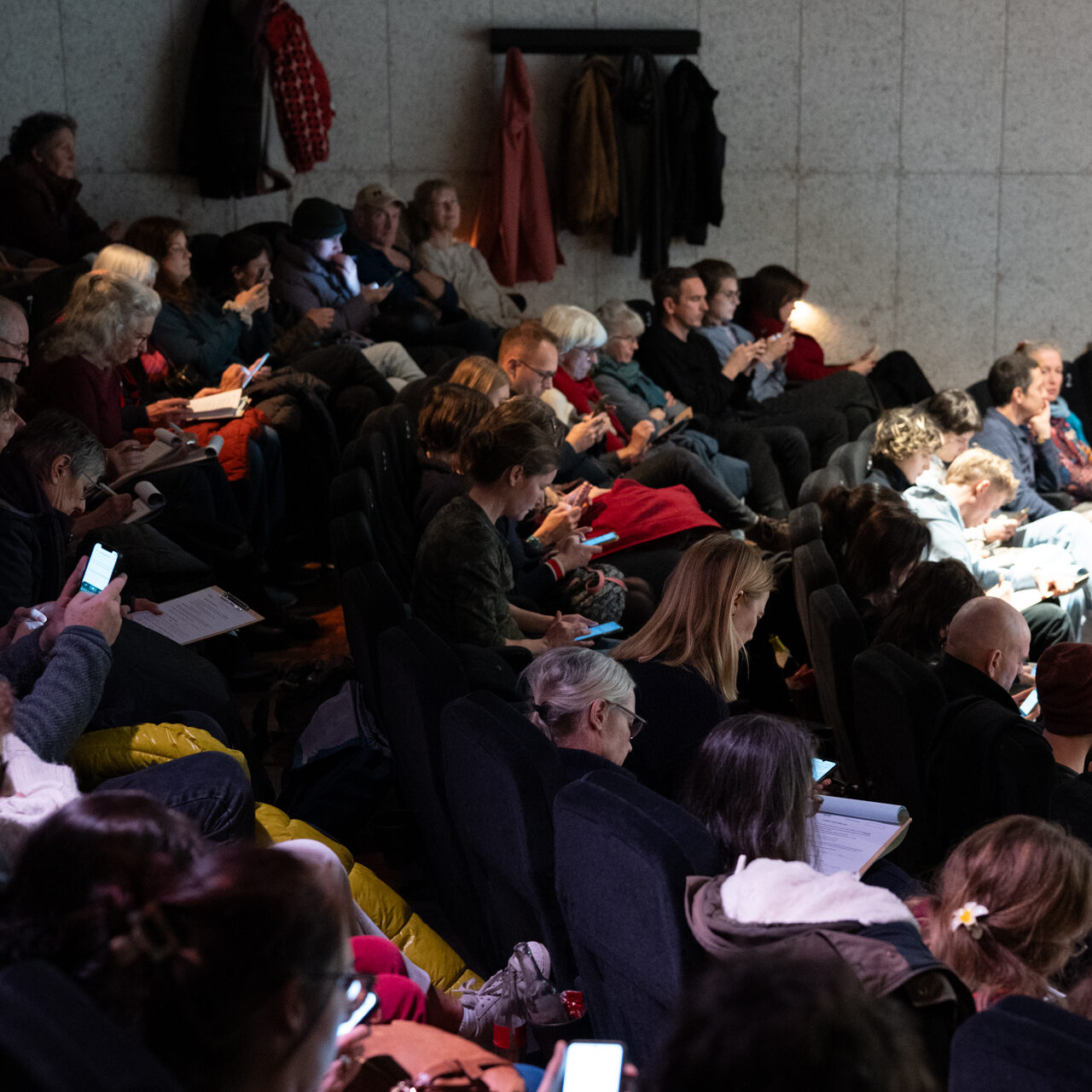
Last Tuesday, we screened Marc Pierschel’s documentary Butenland in a packed auditorium at the Harmonie Cinema. The film and the subsequent discussion focused on how animals live in agriculture and what we can do to change this.
On Tuesday, 2 December 2025, it was time for the final film screening of Visions of Sustainability. As the last film in the series on the topic of well-being, we showed the german documentary Butenland by Marc Pierschel in cooperation with VHS Freiburg and Harmonie Kino. In the film, former dairy farmer Jan Gerdes and animal rights activist Karin Mück present the animal sanctuary of the same name located in lower saxony. Driven by the desire to give cows and other animals considered “livestock” a good life, the two converted the former dairy farm into a sanctuary for all kinds of animals. At the Butenland farm, also known as the ‘cow retirement home,’ the animals get something unaccounted for in agriculture: a good life focused around their needs.
The film draws attention to how unnatural many practices and forms of husbandry in agriculture are. These include the constant milking of cows and the separation of mothers and calves just a few days after birth. But Butenland also shows something else: cows, pigs and other animals that are regarded as livestock are first and foremost living beings. And they benefit from a species-appropriate life without expected ‘yield’ just as much as other animals do. Hof Butenland, therefore, represents an excellent example of how things can be done differently.
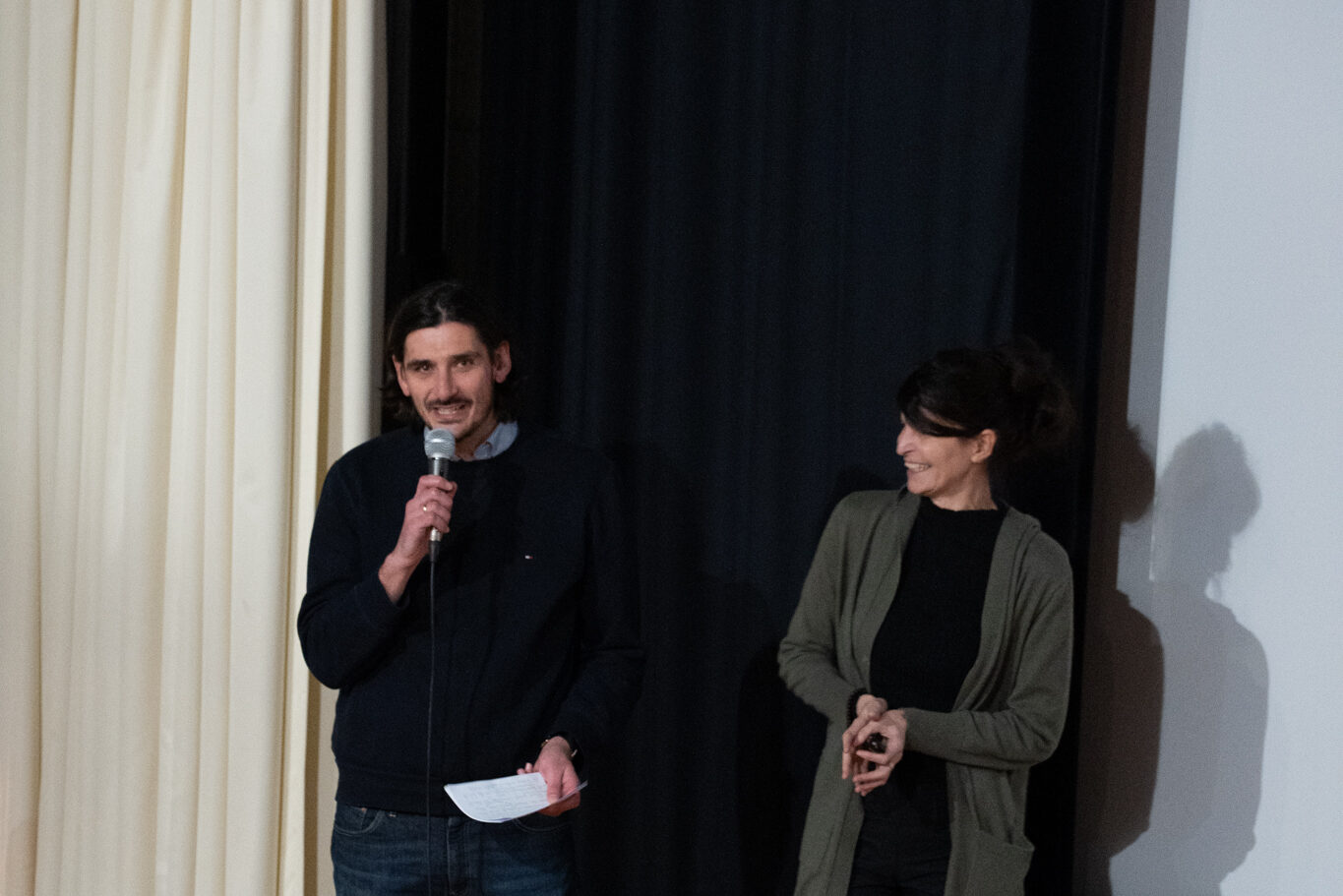
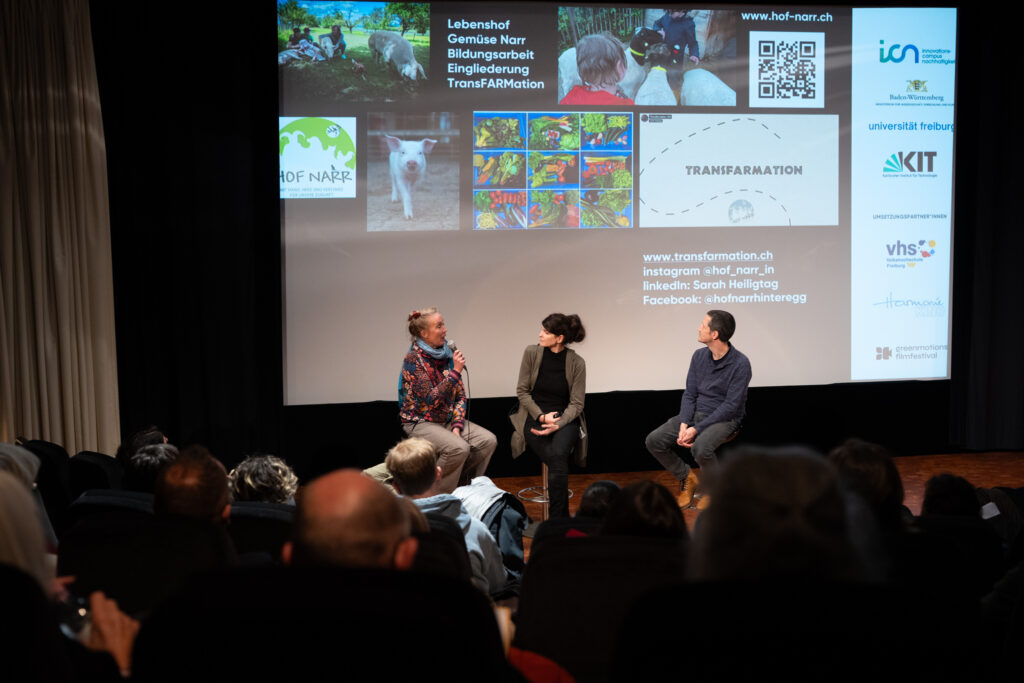
After the film, the audience again had the opportunity to share their impressions of the film with us via our questionnaires. In the subsequent panel discussion, we welcomed Sarah Heiligtag and Georg Klingler from Hof Narr. Located in Hinteregg, Switzerland, the farm is also an animal sanctuary where former farm animals can live a contented life. However, they also grow vegetables and there are regular vegan feasts to celebrate occasions traditionally associated with meat and dairy foods.
In addition, the team supports numerous other farms in Switzerland with their so-called TransFARMation – the transition from livestock farming to growing vegetables and fruit, often in conjunction with an animal sanctuary. The increasingly common desire to make this change usually has very pragmatic reasons: agricultural land can be used much more efficiently and sustainably for vegetable cultivation than for livestock farming. One thing became very clear during the film and the discussion. The more you get to know the animals that continue to be exploited in profit-oriented agriculture, the easier it becomes to switch to a plant-based or even vegan diet. Not out of obligation, but out of empathy across species boundaries.
If you would like to experience what life is like on a sanctuary farm, you are welcome to join us on Saturday, December 13th for a guided tour of the Gnadenhöfle sanctuary farm in Müllheim-Dattingen, followed by an Advent celebration. We look forward to seeing you there!
This event was part of VISIONS OF SUSTAINABILITY, an inter- and transdisciplinary research project funded by the Innovation Sustainability Campus (ICN), located at the Albert Ludwig University of Freiburg and the Karlsruhe Institute of Technology (KIT). Non-university cooperation partners include Harmonie Kino, the Volkshochschule Freiburg and Greenmotions. The Freiburg environmental mayor Christine Buchheit has taken on the patronage of the project.